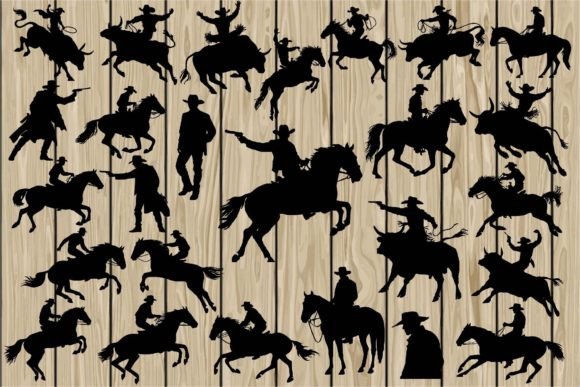
26 Western Cowboy Silhouettes SVG
As a designer who spends more time staring at stitch density charts and fabric swatches than scrolling through social media, I have learned to trust my gut before I ever load a file into the hoop. When I first pulled up 26 Western Cowboy Silhouettes SVG, I didn’t just see a bundle of shapes; I saw a potential bestseller for a craft fair booth or a quick win for an Etsy listing. But does it hold up under the needle? Can it translate from a digital vector into a tangible, high-quality handmade product that customers will actually keep?
I put this design asset to the test. My goal was to determine if these silhouettes are merely decorative clipart or if they possess the structural integrity and visual weight required for serious commercial embroidery. Here is my honest review from the perspective of someone who has stitched hundreds of designs and knows exactly where things go wrong.
The First Impression: Mood and Visual Weight
The immediate appeal of 26 Western Cowboy Silhouettes SVG lies in its simplicity. In the world of machine embroidery, less is often more, especially when dealing with complex textures. These silhouettes offer a bold, graphic quality that screams "Western" without relying on intricate details that might get lost in the stitching process. The mood is rugged, nostalgic, and versatile.
Unlike busy floral patterns or overly detailed landscapes, a silhouette relies on negative space and strong outlines. This makes it an excellent candidate for various techniques. You aren't forced into using only dense fill stitches, which can make a garment stiff and heavy. Instead, this design invites creativity. It works beautifully as an applique design where you layer contrasting fabrics, or it can be executed cleanly with a satin stitch outline followed by minimal running stitch accents. For a small business owner looking to create a cohesive brand identity, the consistent style across 26 variations allows for a unified look across different products.
Real-World Application: From Concept to Finished Product
Let’s talk about how this translates to actual merchandise. I envision this design being used on custom apparel, specifically sweatshirts and heavyweight t-shirts where the fabric can support the weight of the embroidery. However, its versatility extends far beyond basic tees.
- Custom Tote Bags: A large cowboy silhouette centered on a canvas tote is a classic combination. The stark contrast of dark thread on natural cotton creates a striking visual that appeals to both hobbyists and urban dwellers.
- Baby Embroidery: Don’t underestimate the market for Western-themed baby items. A subtle, smaller version of one of these silhouettes on a muslin burp cloth or a tiny pair of overalls can be a hit for nursery decor and baby showers.
- Embroidered Patches: Because silhouettes are self-contained shapes, they digitize exceptionally well as patches. Whether applied to denim jackets, backpacks, or hats, they provide a professional finish without the risk of loose threads catching on other objects.
- Holiday Gifts and Aprons: For kitchen towels or aprons, these designs add a touch of rustic charm. They are perfect for holiday embroidery projects, particularly around Thanksgiving or Christmas, where a western theme fits the cozy, homey aesthetic.
For an Etsy seller or anyone running a craft business, having 26 variations means you can offer customization options. A customer might want a specific pose or a different animal companion within the western theme. This variety increases your design assets value, allowing you to create unique listings without designing from scratch every time.
Technical Considerations and Stitch Clarity
While the concept is strong, execution is everything. As an experienced reviewer, I must point out that silhouette designs can sometimes suffer from poor edge definition if not digitized correctly. When evaluating 26 Western Cowboy Silhouettes SVG, the primary concern is how the edges render after stitching.
If you are using this as a standard embroidery file rather than cutting it with a Cricut or Silhouette, you need to ensure the digitizer has added appropriate underlay stitches to prevent fabric puckering. The stitch density should be moderate. Too dense, and the fabric becomes rigid; too sparse, and the shape loses its integrity. Since the source is an SVG, you may need to convert it into a format compatible with your machine, such as PES or DST, depending on whether you use Brother ScaNcut, Cricut Design Space, or Silhouette Studio.
One critical aspect to consider is the hoop size. Large silhouettes require larger hoops, which can limit where you can place the design on a garment. If you are embroidering near a seam or pocket, you must verify that the design dimensions fit within your machine’s reach. Always check the file specifications before purchasing to ensure compatibility with your equipment.
Where to Exercise Caution
No design is perfect for every scenario. There are specific situations where 26 Western Cowboy Silhouettes SVG might not perform as expected, and knowing these limitations is what separates a pro from a novice.
- Small Hoop Sizes: Attempting to stitch a large, detailed silhouette in a very small hoop can result in distortion or loss of detail. Ensure your design scales appropriately for the project.
- Textured Fabrics: While this looks great on smooth cotton or polyester blends, textured fabrics like bouclé or heavy chenille can obscure the clean lines of a silhouette. The thread might sink into the weave, losing its crisp appearance.
- Stretchy Fabrics: Knits and stretchy materials require special stabilizers and potentially a different stitch type (like a narrow zigzag) to prevent the fabric from wavering. A standard satin stitch on a stretchy cap brim might pucker if not stabilized correctly.
- Dense Stitch Areas: If the design includes solid fills, be wary of creating thick, uncomfortable patches on clothing worn against the skin, such as baby onesies or inner shirt collars.
Practical Designer Notes for Success
Before you rush to list these on your shop or start a client project, follow these practical steps to ensure a professional result.
First, always test the design on scrap fabric first. Use the same fabric and stabilizer you plan to use for the final product. This helps you identify any issues with tension, thread breakage, or registration errors. Second, check thread color contrast. A black silhouette on a black hat will disappear. Test light and dark fabric backgrounds to see which combinations pop visually. Third, inspect small details. Zoom in on the digital file and then look at the stitched sample. Are the reins distinct? Is the horse’s leg clear? If details are too fine, they may merge together during stitching.
Additionally, consider the visual appeal of your finished product. Does it look professional? Does it convey trust? High-quality embroidery signals care and attention to detail, which boosts customer trust and brand consistency. If you are selling these as part of a small shop product line, ensure that the aesthetic aligns with your overall branding.
Finally, confirm licensing terms. If you intend to sell finished products made with this design, or even digital mockups, you must understand the commercial rights associated with the file. Some licenses allow unlimited commercial use, while others restrict the number of items sold. Never assume; always read the fine print to protect your craft business from legal issues.
In conclusion, 26 Western Cowboy Silhouettes SVG is a robust, versatile tool for any designer or crafter. It offers the visual punch needed to stand out in a crowded marketplace while remaining technically manageable for most embroidery machines. By understanding its strengths and respecting its limitations, you can create stunning personalized gifts, durable custom apparel, and profitable digital embroidery files that resonate with buyers. It is not just a file; it is a foundation for creative, profitable work.